
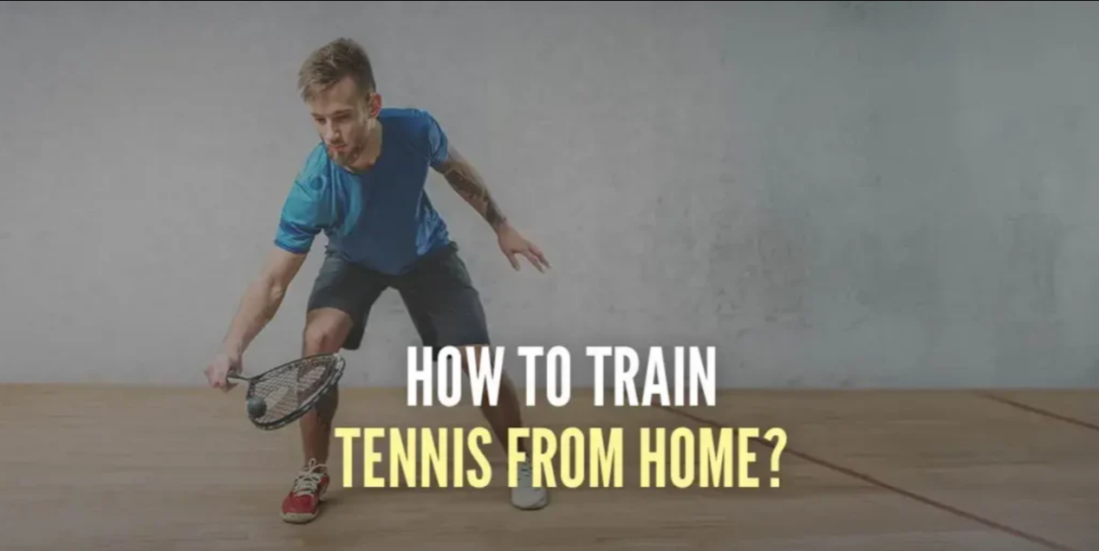
How to Train Tennis at Home
The world of tennis, much like other sports, can sometimes experience unexpected interruptions. Whether you are a professional player, a coach, or simply a passionate enthusiast, there may come a time when you need to keep your training going at home. But the question is: how can you maintain both your fitness and skills without stepping onto a court?
In this guide, you’ll find practical recommendations and exercises to help you continue your tennis training from the comfort of your home. Focus on three essential areas—Strength, Speed, and Racquet Skills—to keep improving your game and stay prepared for when you return to the court.
1. Strength
Building and maintaining strength helps your shots stay powerful and your body stay resilient. Use bodyweight exercises and simple weights if available.
- Warm-up (5–10 minutes): light jogging in place, arm circles, hip swings.
- Squats: 3 sets of 12–15 reps — improves leg drive for serves and groundstrokes.
- Lunges: 3 sets of 10 reps per leg — increases single-leg stability and balance.
- Push-ups: 3 sets of 8–15 reps — builds chest and shoulder strength for serves and volleys.
- Plank variations: front plank 3 × 30–60s, side planks 3 × 20–40s each side — core stability for rotation.
- Single-arm rows (dumbbell or resistance band): 3 sets of 10–12 reps each arm — strengthens the back and helps racquet control.
- Hip bridges: 3 sets of 12–15 reps — strengthen glutes to protect knees and generate power.
2. Speed & Footwork
Footwork wins points. Improve acceleration, change of direction, and agility with short, focused drills.
- Agility ladder drills (or use chalk/tape): high knees, in-and-out, lateral shuffles — 4 rounds of 30–60s.
- Cone/Towel shuttle: place 3 markers 3–5 meters apart; sprint to marker and back, alternating directions — 6–8 reps.
- Side-to-side bounds: 3 sets of 10 bounds — build lateral explosiveness.
- Reaction drill: Partner or a bouncing ball — move on their cue to improve reaction time. If alone, use a phone metronome or audio cue.
- Plyometric step-ups: 3 sets of 10 per side — explosive single-leg power for quick court movement.
3. Racquet Skills
Even without a court, you can refine swing mechanics, consistency, and feel for the ball.
- Shadow swings: Practice forehand, backhand, serve, and volley swings without a ball — 3–4 sets of 20 reps focusing on technique and rhythm.
- Ball-on-string / tethered ball: If available, use a tethered ball to practice groundstrokes and timing in limited space.
- Wall rally: Find a sturdy wall and hit forehands and backhands — start slow, aim for consistent rebounds, 5–10 minutes per side.
- Serve toss and motion: Practice your toss and full serve motion (no ball contact) to improve consistency.
- Target practice (indoors): lay small targets or cones and practice controlled swings directing imaginary balls to targets—improves placement awareness.
Sample 45–60 Minute Home Session
- Warm-up: 8–10 minutes (dynamic stretches + light cardio)
- Strength block: 20 minutes — 3 exercises, 3 sets each (e.g., squats, push-ups, single-arm rows)
- Speed/footwork block: 10–12 minutes — ladder/cone drills or shuttle sprints
- Racquet skills block: 10–15 minutes — shadow swings, wall rally, or tethered ball
- Cool-down & stretch: 5–8 minutes — static stretches focusing on hamstrings, quads, shoulders, and lower back
Equipment & Space Tips
- Minimal gear: tennis racquet, a few balls, resistance band, light dumbbells (optional), and cones or markers.
- Use small spaces effectively: short drills, shadow work, and core exercises are ideal when space is limited.
- Safety first: ensure a non-slip surface and enough clearance—avoid practicing aggressive footwork in cramped areas.
Programming & Progression
Consistency and gradual progression are key. Start with 3 home sessions per week and increase intensity or volume every 1–2 weeks. Alternate hard sessions (strength + speed) with lighter racquet-focused days or active recovery.
Mindset & Recovery
Stay patient and focused on steady improvement. Prioritize sleep, hydration, and proper nutrition to support recovery. Use mobility and foam rolling to prevent tightness and reduce injury risk.
Final Notes
Training at home can keep your tennis sharp when courts are unavailable. By targeting Strength, Speed, and Racquet Skills, you’ll maintain progress and be ready to perform when you return. For more tips and equipment recommendations, visit hsnstore.ae.







The information below is required for social login
Sign In
Create New Account